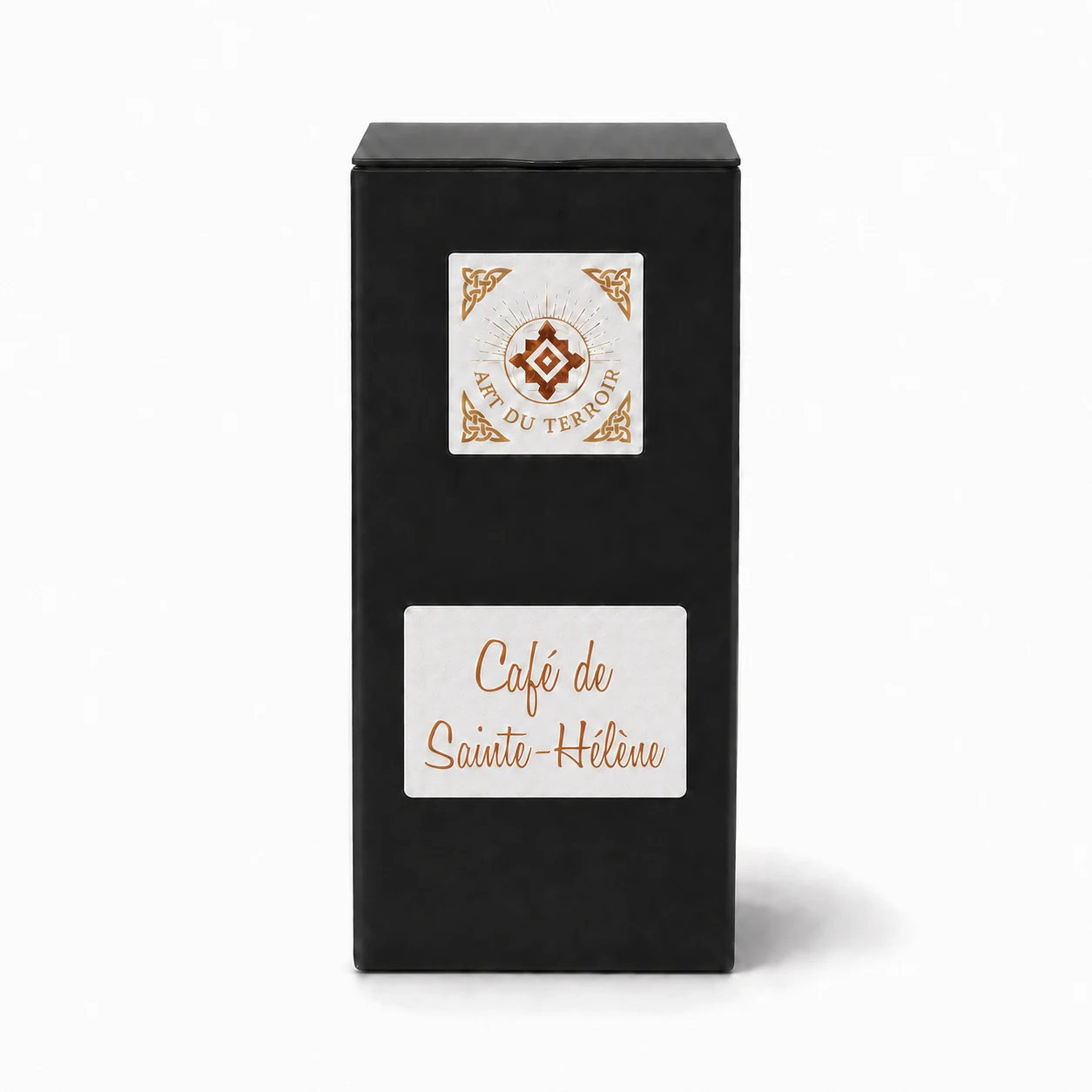
Saint Helena Coffee | Green Tipped Bourbon Variety
Island cultivation on volcanic soils: a balanced acid profile and a high concentration of aromatic precursors.
Location and Growing Variables
Biotope
This coffee comes from the Green Tipped Bourbon variety, introduced to the island of Saint Helena in 1733. The coffee trees are grown on isolated plots in the South Atlantic, benefiting from nutrient-rich volcanic soil and constant rainfall. Geographical isolation preserves the genetic purity of the strain.
Harvest
Selective hand-picking carried out at the drupes' full ripeness. Only cherries showing a bright red color and optimal density are retained, to guarantee the uniformity of the lot.
Technical Data and Processing
Wet processing (washing) followed by natural sun-drying on raised beds. This process preserves the natural citric acidity and removes impurities before the stabilization phase.
Slow artisanal roasting, calibrated to reach the point of pyrolysis without carbonizing the fibers. This precise thermal control allows the development of Maillard reactions, transforming complex sugars into volatile aromatic compounds.
A notable presence of alkaloids (caffeine) and antioxidant chlorogenic acids, whose stability is ensured by storage in a controlled atmosphere after processing.
Organoleptic Characteristics
-
MouthfeelA light, silky body, characterized by an absence of fibrous sediment and remarkable clarity in the cup.
-
Aromatic SpectrumAn architecture defined by a fine, persistent acidity. Notes of brown caramel, roasted hazelnut and cocoa beans, resulting from the caramelization of residual sugars.
-
BalanceLow bitterness and an absence of earthy notes, confirming the quality of the sorting and the precision of the roasting.
Brewing Parameters
Extraction: For an optimal expression of the volatile oils, favor filter extraction (a gentle method) with filtered water at 92°C. Recommended ratio: 60 g of coffee per liter of water.
Grinding: The grind should be suited to the brewing method (medium for filter, fine for espresso) and performed immediately before extraction to limit the loss of aromatic gases.