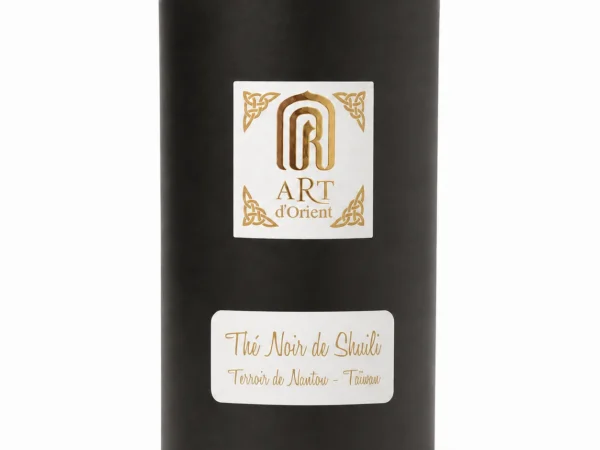
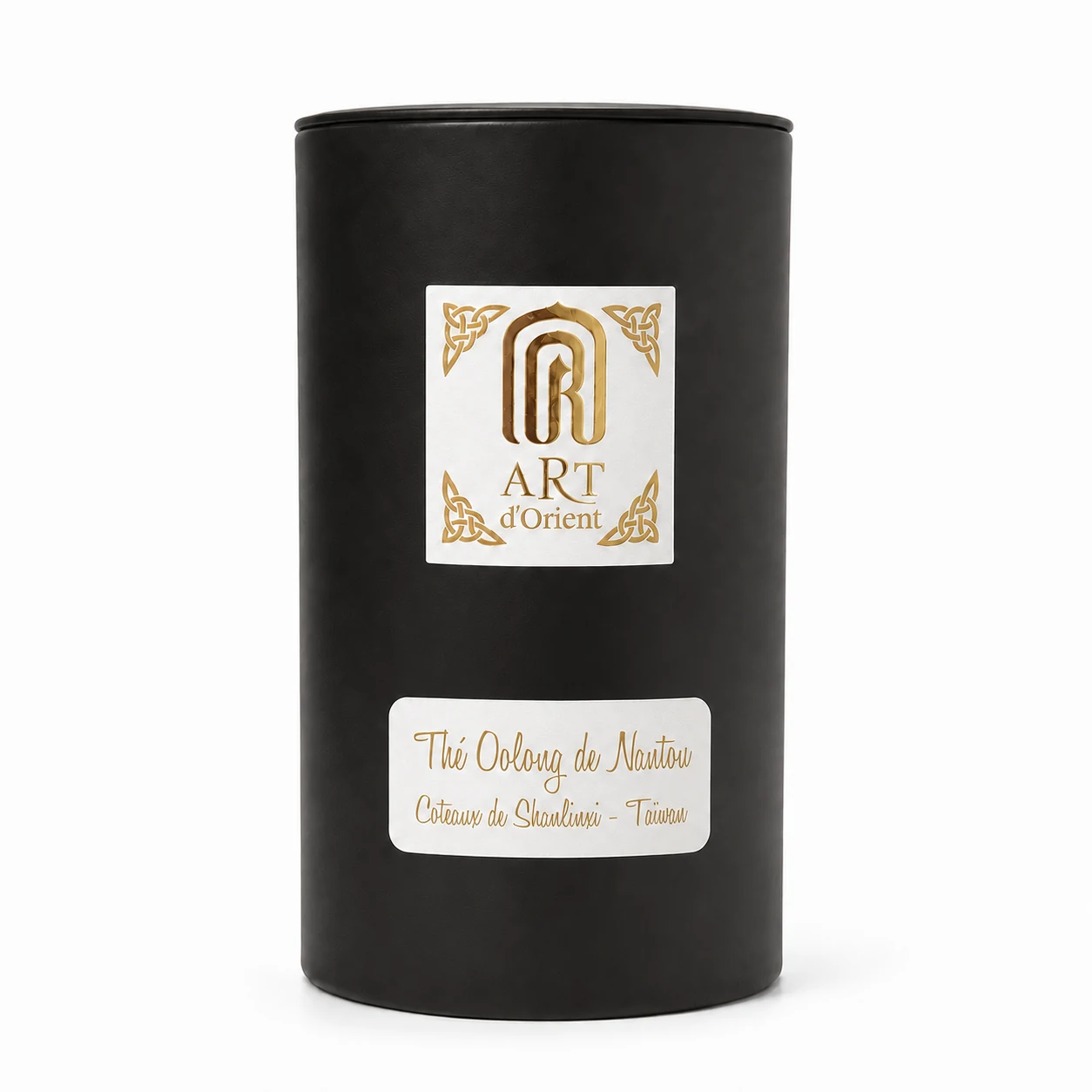
Nantou Oolong Tea | Grand Cru Grade • Partial Oxidation
A semi-polymerized molecular structure: an enzymatic balance between catechins and thearubigins.
Location and Growing Variables
Biotope
Grown in the mountainous areas of Nantou district, Taiwan. The plantations benefit from free-draining volcanic soil and a persistent mist that reduces direct exposure to sunlight. This microclimate favors a slow synthesis of metabolites and a heightened concentration of amino acids.
Harvest
A “fine” hand-pluck (the bud and the following two or three leaves). The leaves are selected for their turgidity and water content, critical variables for the success of the withering process.
Technical Data and Processing
Controlled partial oxidation (between 20% and 40%). The leaves undergo sun-withering followed by a phase of mechanical tumbling in drums. This process breaks the leaf margins, triggering localized enzymatic oxidation.
The process is halted by a brief high-temperature roasting (fixation), deactivating the enzymes. The leaves are then rolled into tight pearls, protecting the volatile oils at the heart of the plant structure.
A balanced presence of original polyphenols and complex molecules born of oxidation, offering greater chemical stability than green teas.
Organoleptic Characteristics
-
MouthfeelA round, velvety texture. The gradual unfurling of the rolled leaves allows a sequential release of the solutes, offering persistent length on the palate.
-
Aromatic SpectrumAn architecture defined by a floral attack (osmanthus, white flowers) evolving towards honeyed heart notes. The finish presents discreet woody nuances arising from the reaction of the sugars during thermal fixation.
-
Character in the CupThe synergistic action of caffeine and polymerized polyphenols, recognized for supporting lipid metabolism and the regulation of oxidative stress.
Brewing Parameters
Extraction: Recommended water temperature: 85°C to 90°C. This heat is necessary to open the compressed leaves and release the dense aromatic compounds.
Protocol: Use 4 g of tea for 200 ml of filtered water. Infusion time: 3 to 4 minutes. This tea is particularly suited to multiple infusions (the Gong Fu Cha method), each steeping revealing a new stratum of its molecular structure.
Result: A liquor of golden to amber clarity, without any turbidity, testifying to the precision of the rolling.