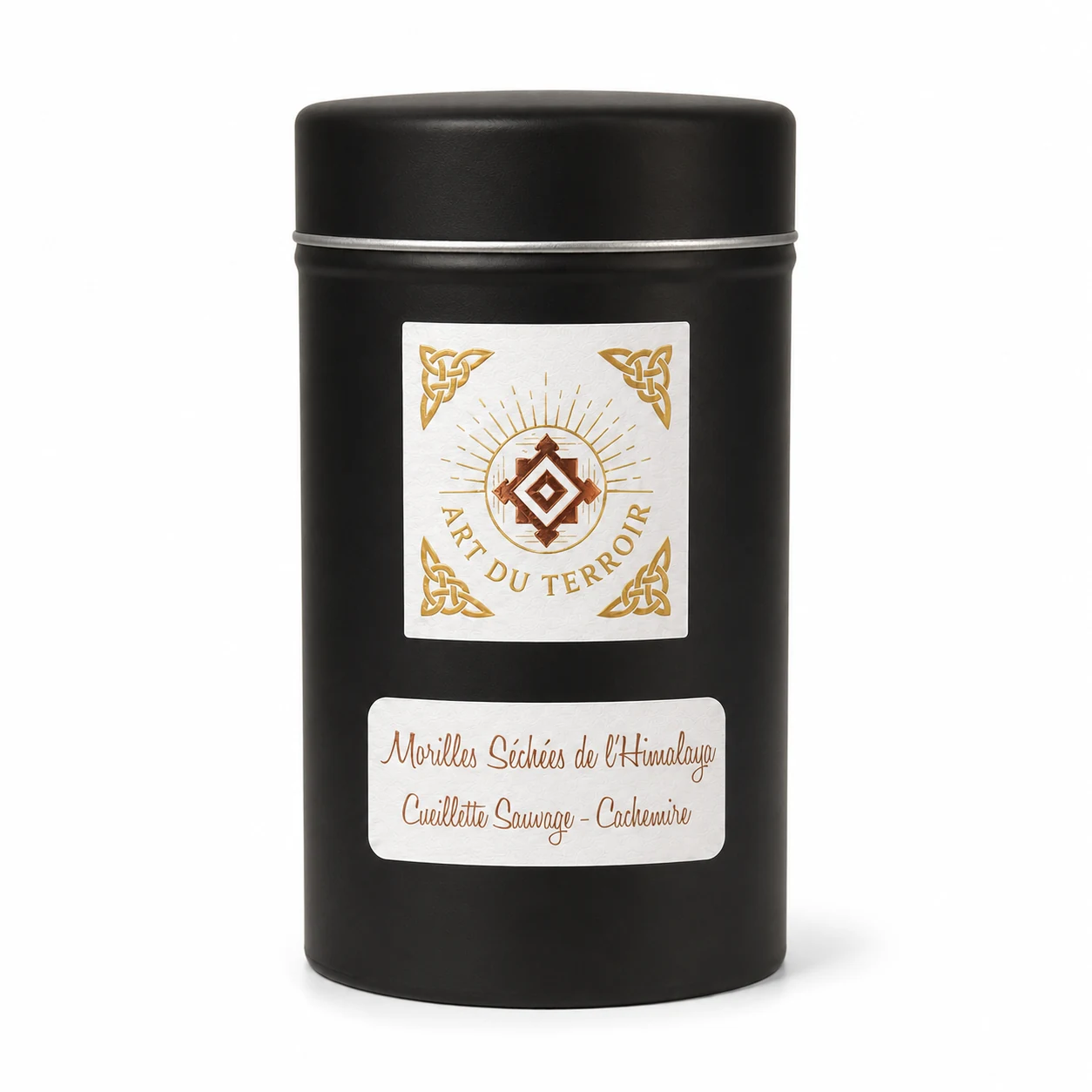
Morilles Séchées de l’Himalaya | Sélection Sauvage • Grade Spécial
Structure fongique déshydratée : Carpophore des variétés Morchella conica et Morchella esculenta, caractérisé par un taux d’humidité résiduel inférieur à 12 %.
Localisation et Variables de Croissance
Biotope
Récoltées dans les écosystèmes de haute altitude de la chaîne himalayenne, entre 2500 et 3500 mètres. Le sol, enrichi par la décomposition de la biomasse forestière et irrigué par les eaux de fonte des glaciers, favorise une croissance lente et une minéralité fixée dans les tissus.
Harvest
Cueillette manuelle après la fonte des neiges. La rareté du champignon est liée à sa dépendance aux cycles climatiques spécifiques de l’altitude, limitant la période de récolte à quelques semaines par an.
Technical Data and Processing
Processus de déshydratation naturelle contrôlée. L’élimination de l’eau permet la concentration des précurseurs d’arômes et la stabilisation des protéines. Ce procédé mécanique transforme la structure cellulaire, rendant les parois plus aptes à la réhydratation ultérieure.
Tri rigoureux des spécimens selon leur intégrité structurelle. Les alvéoles du chapeau doivent être profondes et intactes pour maximiser la surface d’échange lors de l’infusion ou de la cuisson.
Forte concentration en acides aminés et en composés soufrés volatils, responsables de l’intensité olfactive caractéristique des morilles de haute altitude.
Organoleptic Characteristics
-
MouthfeelAprès réhydratation, la texture est charnue, ferme et élastique. La structure alvéolée permet de retenir les sauces et les sucs de cuisson, créant une libération progressive des saveurs.
-
Aromatic SpectrumProfil dominé par des notes de tête boisées et de sous-bois humide. Le cœur révèle des nuances de noisette grillée et des accents fumés, résultant de la concentration des composés organiques lors du séchage.
-
PersistanceLongueur en bouche marquée par une empreinte umami prononcée, caractéristique des champignons sylvestres ayant grandi en milieu sauvage.
Brewing Parameters
Réhydratation : Immersion dans une eau tiède (environ 40°C) pendant 30 à 60 minutes. Le liquide de trempage, saturé en molécules aromatiques, doit être filtré et utilisé comme base pour les sauces afin de conserver l’intégralité du profil organoleptique.
Cuisson : Nécessite impérativement un traitement thermique prolongé (minimum 15 minutes) pour éliminer les toxines thermolabiles naturellement présentes dans la morille fraîche et stabiliser les saveurs.
Storage: Stockage dans un contenant hermétique, dans un endroit sec et à l’abri de la lumière. La structure déshydratée permet une conservation pluriannuelle sans perte de densité aromatique.