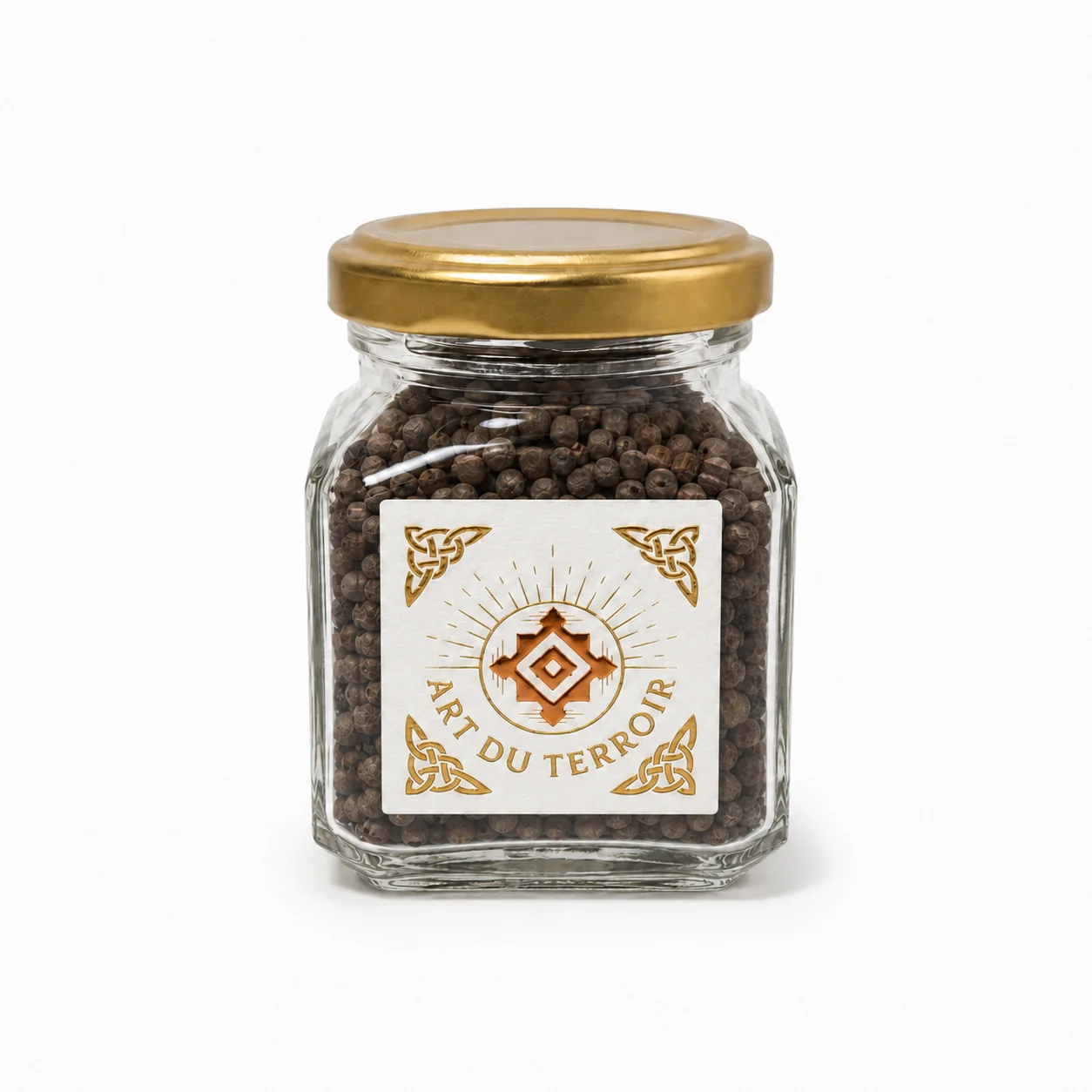
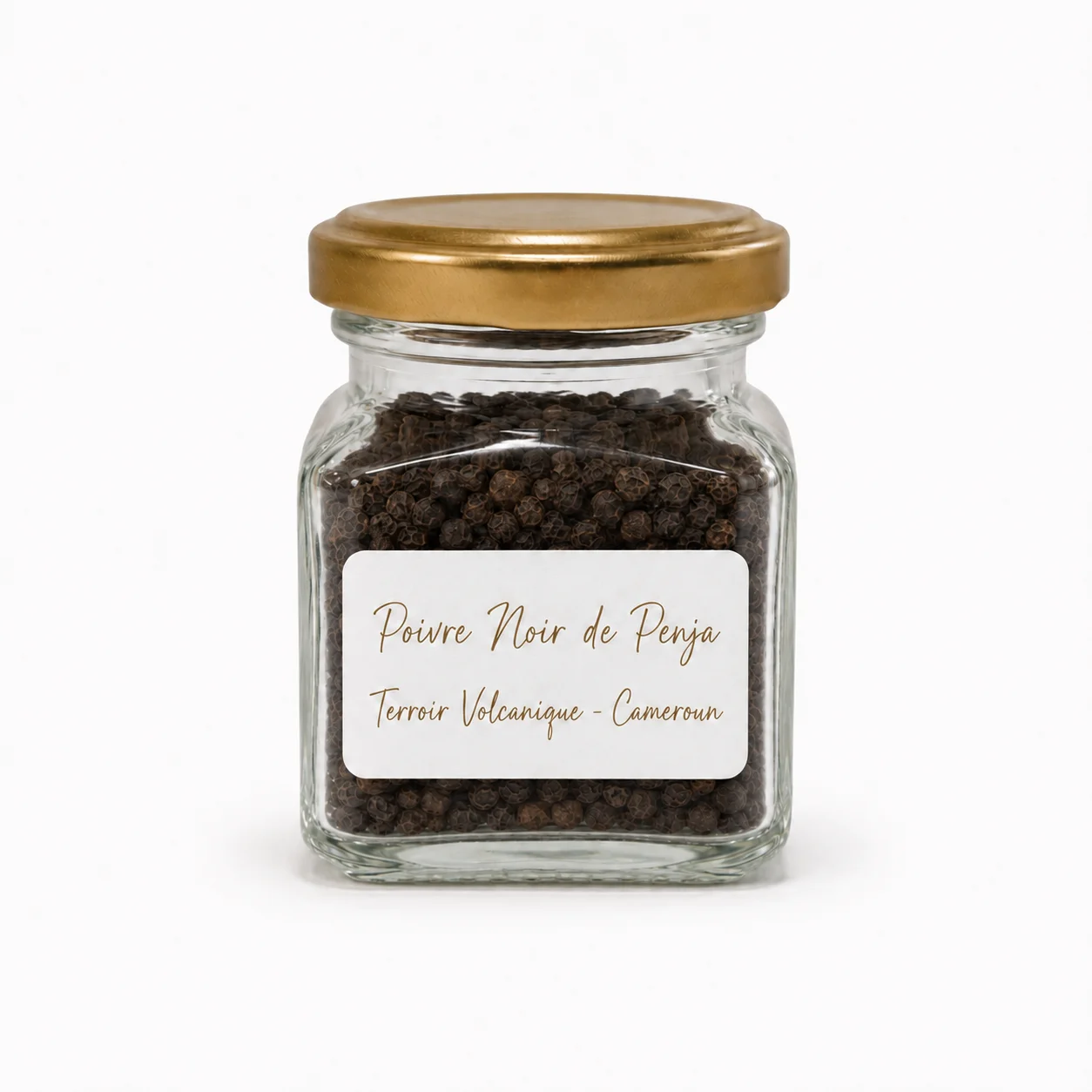
Penja Black Pepper | Gourmet Grade • PGI Certification
A molecular structure with a high concentration of piperine: high-density berries from the basaltic terroirs of the Moungo.
Location and Growing Variables
Biotope
Grown in the Penja valley, Cameroon, on soils of volcanic origin (basalt). This earth, exceptionally rich in minerals and trace elements, gives the pepper a singular mineral signature. The equatorial climate, marked by high humidity and stable temperatures, favours an optimal enzymatic development within the drupe.
Harvest
A hand harvest of the clusters at a precise stage of maturity, just before the colour turns to red. This timing fixes the peak of essential oils and ensures the mechanical hardness of the berry after drying.
Technical Data and Processing
After harvest, the berries undergo a short natural fermentation followed by sun drying on controlled surfaces. This slow dehydration allows the polymerisation of the phenols, responsible for the intense black colour and the complexity of the bouquet.
A rigorous optical and densimetric sorting, berry by berry. Only berries of even diameter and superior density are retained, ensuring a homogeneous grind and a constant aromatic expression.
A product holding a Protected Geographical Indication (PGI), certifying the absence of blending with peppers of lower grade or other origins.
Organoleptic Characteristics
-
MouthfeelA frank, incisive attack. The physical structure of the berry offers a crisp resistance that instantly releases the volatile compounds when ground or crushed.
-
Aromatic SpectrumAn architecture built around deep woody notes and nuances of damp earth. One also identifies touches of liquorice and menthol at the heart, born of the synergy between the natural terpenes and the volcanic terroir.
-
Character in the CupIts high piperine content gives the pepper its characteristic warmth on the palate, and its natural affinity with meat.
Brewing Parameters
Grinding: To be ground exclusively at the moment of serving. An instant grind preserves the essential oils, which oxidise rapidly on contact with air.
Application: Best added at the end of cooking. Prolonged exposure to heat above 180 °C risks denaturing the floral terpenes and unduly accentuating bitterness.
Storage: Store in an amber glass jar, away from humidity and light, to prevent the evaporation of the volatile aromatic compounds.