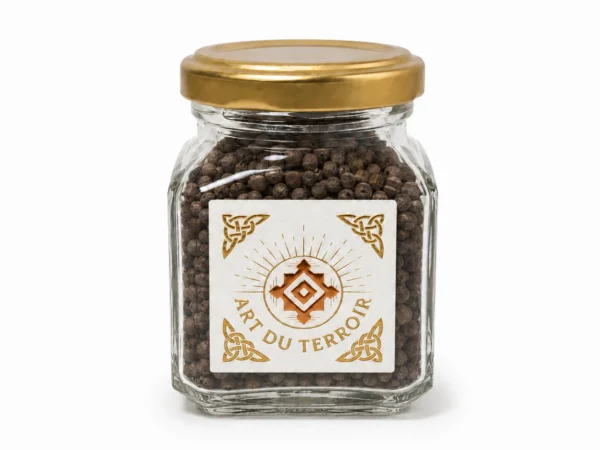
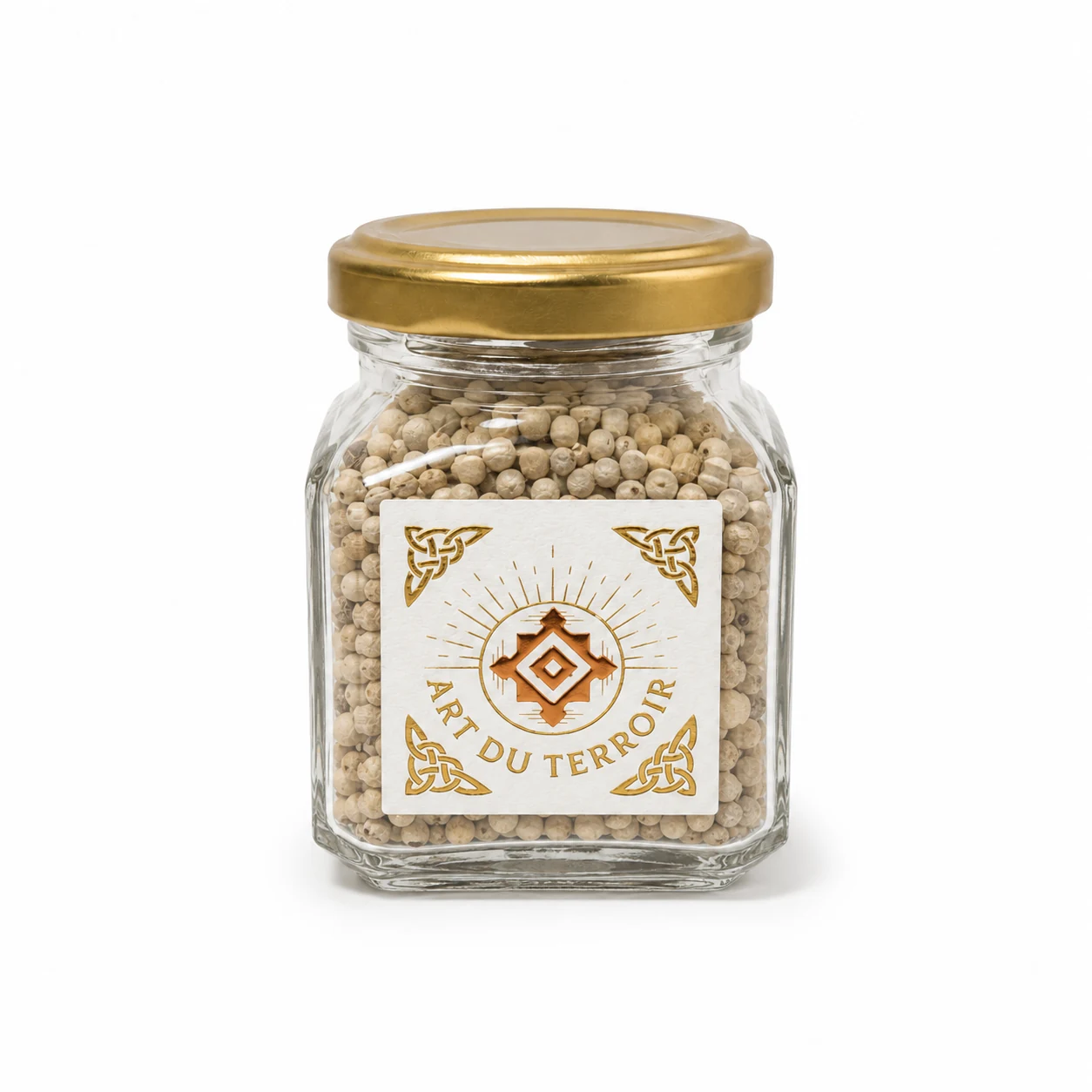
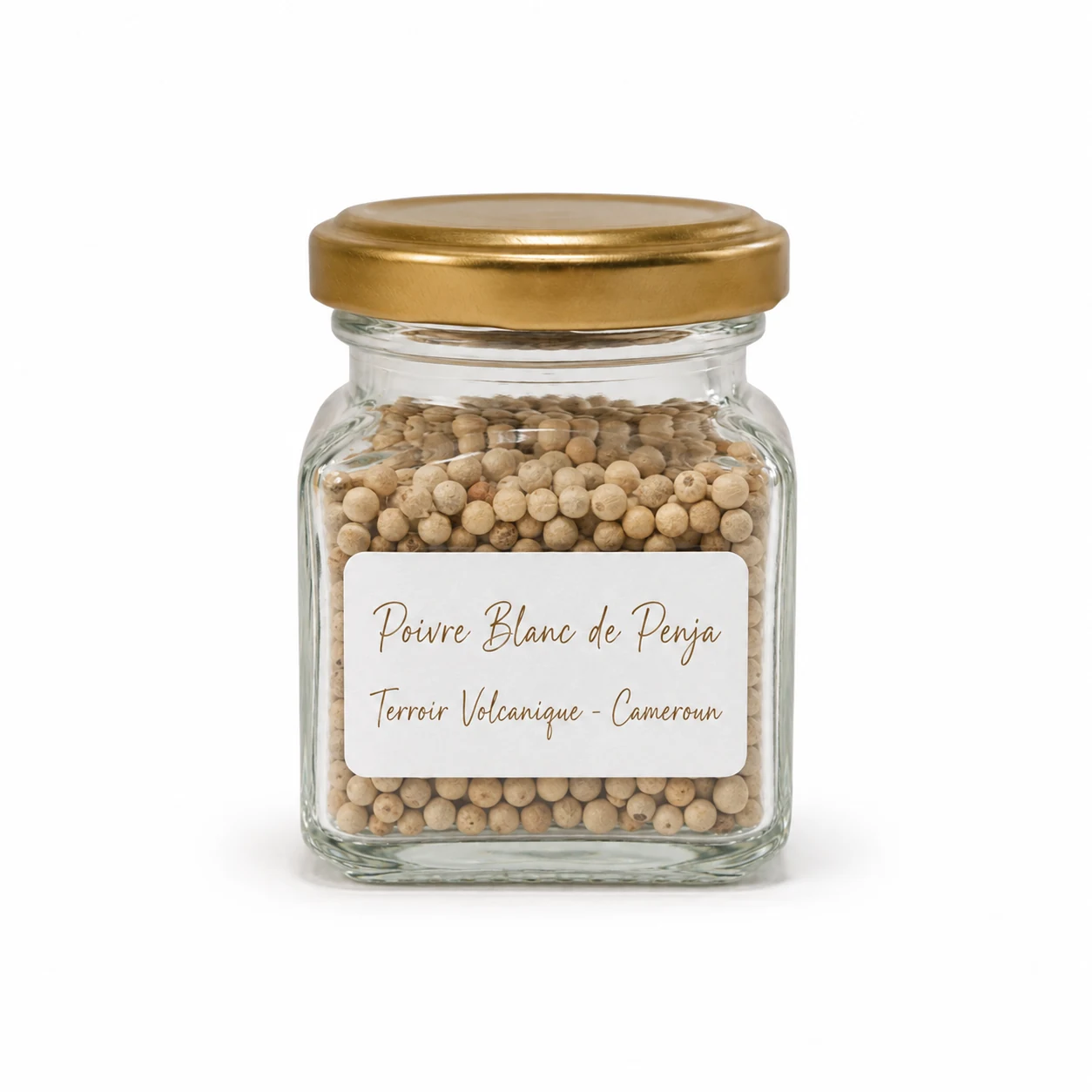
Penja White Pepper | Exception Grade • PGI Certification
A purified molecular structure: a berry stripped of its pericarp, concentrating the animal and earthy notes at the heart of the kernel.
Location and Growing Variables
Biotope
From the plantations of the Penja valley (Cameroon), benefiting from a basaltic volcanic substrate exceptionally rich in minerals. The equatorial climate, with its regular rainfall and constant warmth, allows a slow and complete ripening of the pepper clusters.
Harvest
Hand-harvested at the stage of red ripeness (full maturity). Only the fleshiest drupes are selected to guarantee a dense stone, rich in essential oils, after the retting process.
Technical Data and Processing
Unlike black pepper, white pepper undergoes retting: the red berries are immersed in pure local spring water to soften the pericarp (the outer envelope). This envelope is then removed mechanically by washing, keeping only the kernel of the berry.
The bared kernels are dried in the tropical sun on ventilated racks. This technical protocol removes the surface pungency and the burning notes, stabilizing the deep organic compounds.
PGI certification guaranteeing the single origin of the Penja terroir. Optical sorting ensures an even grain and a natural creamy whiteness, with no chemical bleaching.
Organoleptic Characteristics
-
MouthfeelA round, subtle attack. The texture of the ground pepper is fine, offering an immediate aromatic diffusion without the thermal aggression of black peppercorns.
-
Aromatic SpectrumAn architecture defined by noble animal notes and a marked earthy identity. One detects nuances of leather, menthol and dry herbs, born of the controlled fermentation during retting.
-
Culinary ImpactIts aromatic clarity underlines the structure of a dish without altering its color (ideal for white sauces or delicate fish).
Brewing Parameters
Grinding: Favor a fine or medium grind at plating. Without its envelope, the berry is more sensitive to oxidation once crushed.
Usage: It expresses itself fully on iodized flavors, poultry or root vegetables. Its resistance to heat is moderate; better to add it at the end of preparation to preserve its most fragile volatile molecules.
Storage: To be kept in a dry environment away from light, to maintain the brilliance of its color and the integrity of its bouquet.