
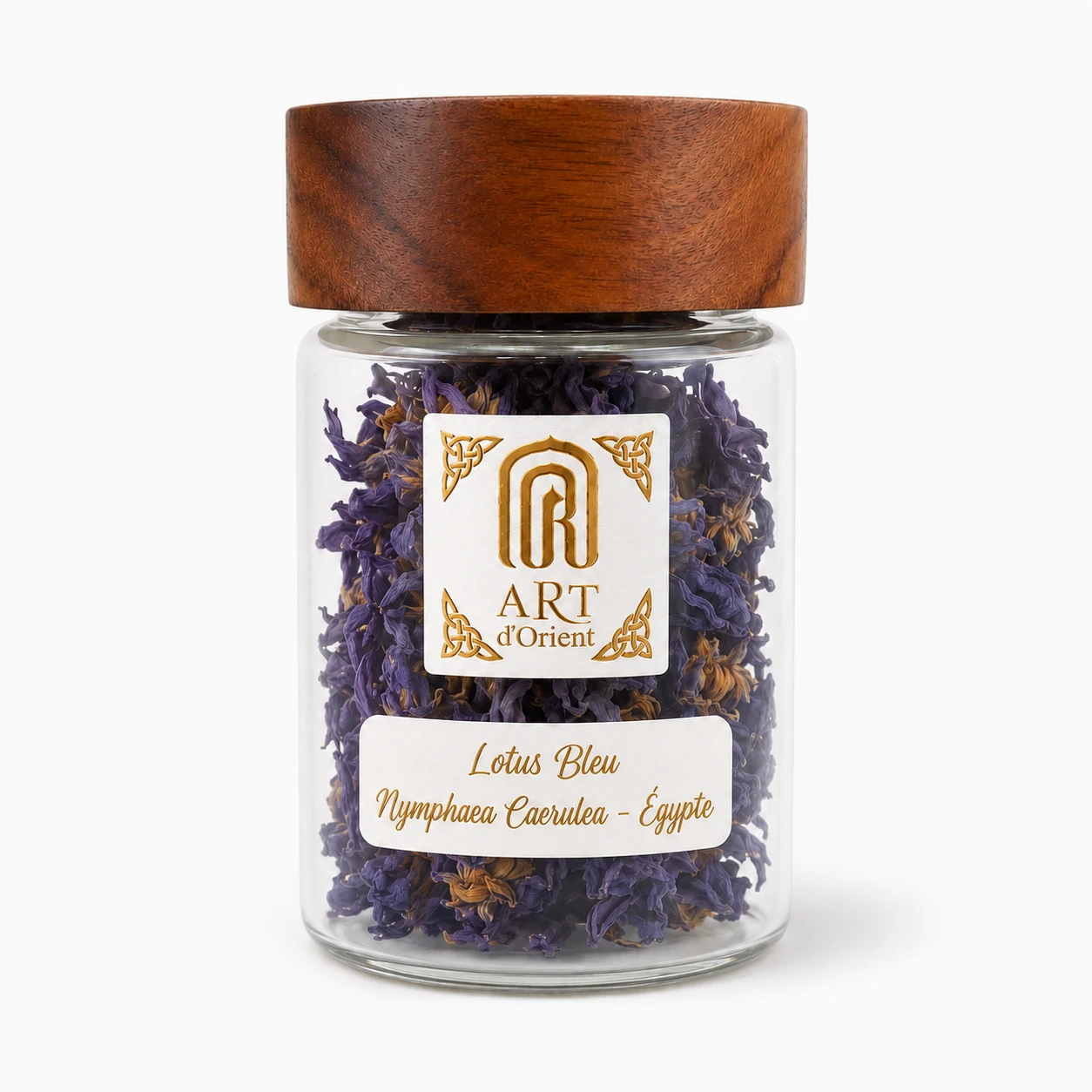
Egyptian Blue Lotus Flowers (Imperial Organic Selection) | Whole Dried Flowers • Protected oases and choice organic terroirs
Nymphaea caerulea: whole dried flowers, Superior Elite Grade.
Location and Growing Variables
Biotope
The sacred treasure of the pharaohs and the nymphs of the Nile: a symbol of spiritual rebirth and immortality in ancient Egypt, the Blue Lotus (Nymphaea caerulea) embodies the absolute aristocracy of contemplative plants. This masterful lot comes from a legendary and exclusive botanical lineage, grown at the heart of preserved oases and protected wetlands. Unlike mass production, this sacred ethnobotanical variety flourishes without any chemical input in a highly controlled ecosystem, allowing the plant to develop its richest and densest signature of aromatic compounds — a floral infusion of great softness, with honeyed and lightly peppery notes, traditionally favoured at the end of the day.
Harvest
The quintessence of the harvest, the whole flower preserved: the technical rarity of this organic lot rests on a goldsmith's discipline of picking. The artisan herbalists set out at dawn, at the precise moment the flower opens to the first rays of the sun, to capture the fullness of its aromatic sap. Only flowers at the height of their chromatic display are selected by hand, one by one. The lot drastically excludes broken petals, wilted hearts and stem residues of a lower grade.
Technical Data and Processing
Scientific Name
Nymphaea caerulea.
Principal Name
Blue Lotus Flowers of Egypt.
Traditional Name
Sacred Lotus of the Nile, Blue Water Lily.
Origine
Protected oases and choice organic terroirs.
Part Used
Whole dried flowers (Superior Elite Grade).
Format
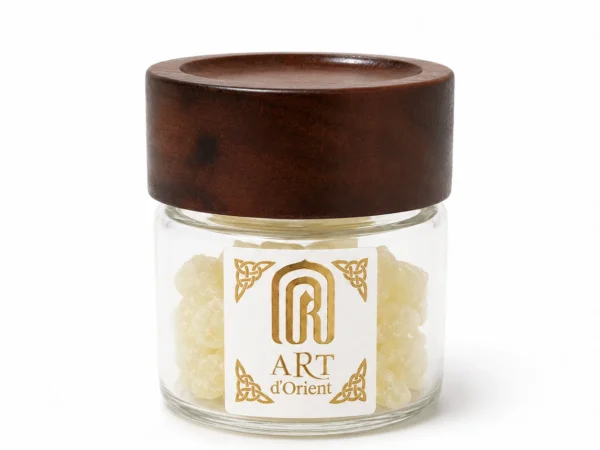
Whole flowers calibrated for an 80 ml apothecary jar.
Organoleptic Characteristics
-
Appearance & TextureVoluminous whole flowers, petals of a deep royal blue-violet, heart and stamens a vivid golden yellow. A beautifully dry, crisp and intact texture, releasing a heady scent — soft, floral and honeyed.
-
Drying SignatureThe ultra-slow dehydration process at controlled room temperature fixes the intense blue-violet colour of the petals and preserves the integrity of the golden pistil, locking in a complex fragrance — suave, mystical and deeply floral, with accents of wild honey.
Brewing Parameters
01
Method of preparation (traditional infusion): Take 1 to 2 whole flowers (or about 2 to 3 grams of petals and pistils) for a 250 ml cup. Pour barely trembling spring water heated to between 80 °C and 85 °C at most, so as to respect the flower's delicate volatile essences. Leave to infuse, covered, for 7 to 10 minutes. The petals rehydrate, giving a clear, golden liquor with a silken, subtly floral taste. Strain before tasting.
02
Ritual use (maceration): Following the traditional rituals of the ancient Egyptian court, whole flowers may be left to macerate in a flask of wine or a fine hydro-alcoholic solution for a few days, fully releasing their fat-soluble compounds and their mystical fragrance.
03
Precautions for use: A pure, raw natural product intended for adults only. Best enjoyed at the end of the day or during a moment of contemplation. Not recommended for pregnant or breastfeeding women, nor for children. Keep the glass jar hermetically sealed, away from direct humidity and sunlight, to preserve the brilliance of its royal colour and the purity of its olfactory signature.
Reviews
There are no reviews yet.