Egyptian Royal Jelly | Fresh Grade • 10-HDA Content
An active biological structure: a substance secreted by the hypopharyngeal and mandibular glands of worker bees (Apis mellifera), intended exclusively for the nutrition of the royal larva.
Location and Production Variables
Harvested in the fertile zones of the Nile valley. The diversity of Egyptian melliferous flora and the constant sunshine allow a sustained glandular activity in the nurse bees, ensuring a high nutritional density.
Extraction by delicate aspiration from royal cells three days old. This precise timing corresponds to the peak concentration of the active compounds before their metabolization by the larva.
Egyptian royal jelly at a glance
Royal jelly is the substance secreted by worker bees to feed queen larvae. This one is harvested in the Nile Valley, Egypt, from three-day-old queen cells, then packed fresh, with no freeze-drying and no additives. It keeps in the refrigerator between 2 and 5 °C.
| Origin | Nile Valley, Egypt |
|---|---|
| Bee | Apis mellifera |
| Form | Fresh, not freeze-dried, no additives |
| Format | 20 g jar |
| Price | $60 per 20 g, i.e. $3,000 per kilo |
| Storage | Between 2 and 5 °C, away from light and air |
Product page updated 22 October 2026
Technical Data and Chemical Composition
A guaranteed content of 10-hydroxy-2-decenoic acid, a fatty acid specific to royal jelly that cannot be synthesized industrially. This compound is the principal indicator of the freshness of the product.
A complex concentration of essential amino acids, B-group vitamins (notably B5 and B6), minerals and trace elements. Its structure also includes acetylcholine, a compound naturally present in royal jelly.
A raw product, not freeze-dried and without additives. The cold chain is maintained from extraction onwards to halt the degradation of heat-sensitive enzymes and water-soluble proteins.
Organoleptic Characteristics
- MouthfeelA gelatinous, unctuous and lightly opalescent texture. The attack is lively, marked by a pronounced acidity (pH between 3.5 and 4.5) and a tingling sensation on the tongue, signs of its biological activity.
- Aromatic SpectrumA singular olfactory profile, mingling phenolic notes with a touch of acidity. The taste is barely sweet, with a sharp, lasting finish characteristic of pure glandular bee secretions.
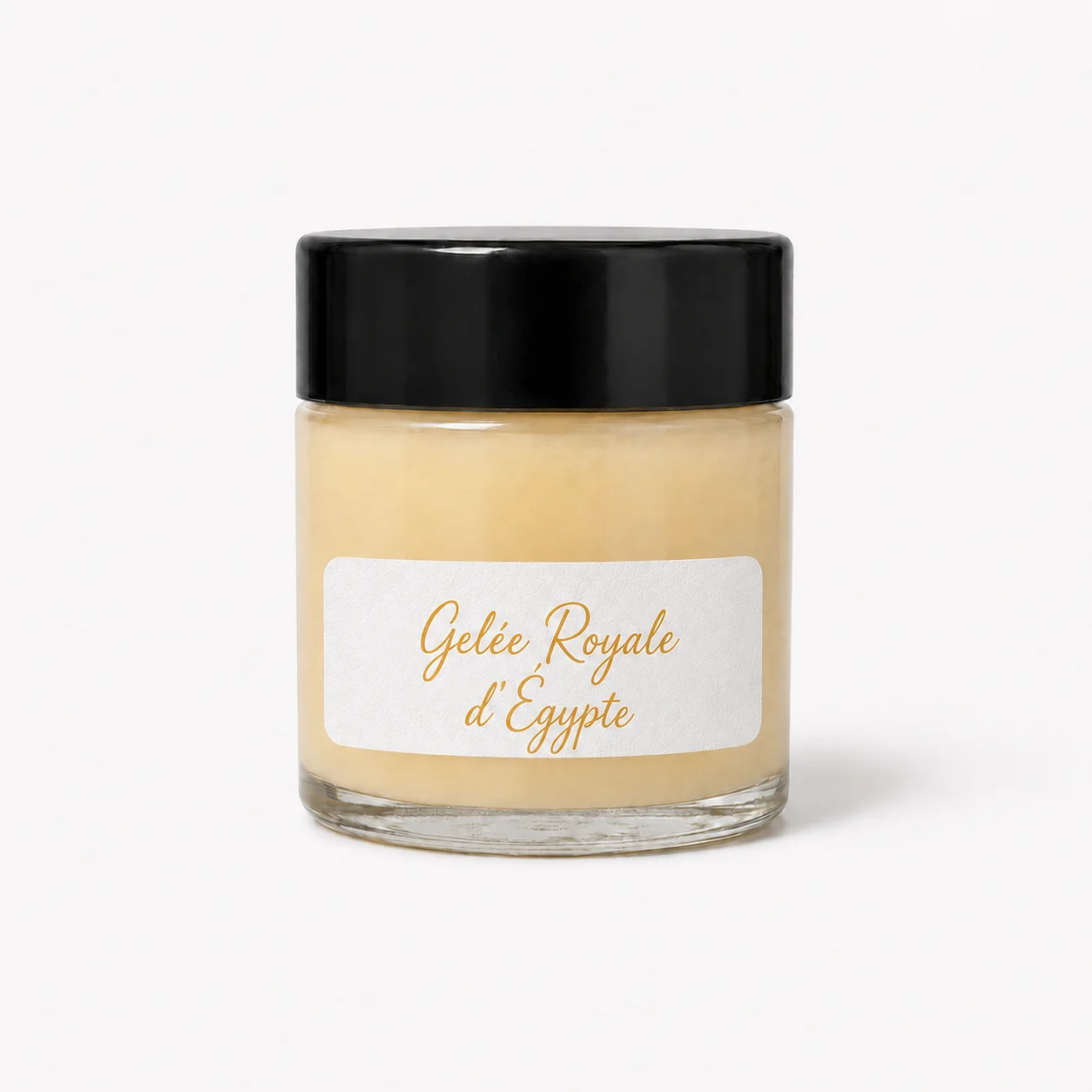
- Visual AspectA cream-white to pale yellow color. The absence of air bubbles and a homogeneous surface attest to a rigorous technical handling during potting.
Parameters of Use and Storage
Consumption: 500 mg to 1 g a day, left to melt in the mouth.
Composition: Its complex structure combines proteins, natural sugars and fatty acids specific to royal jelly.
Storage: Storage between +2 °C and +5 °C (refrigerated) is essential, away from light and oxygen. Prolonged exposure to room temperature causes an irreversible oxidation of the lipids and a loss of enzymatic activity.
Frequently asked questions about fresh royal jelly
What is fresh royal jelly?
Fresh royal jelly is royal jelly sold as it comes out of the hive, with no freeze-drying and no additives. It has a gelatinous, creamy texture, a creamy white to pale yellow colour and an acidic, barely sweet, slightly tingling taste.
How should royal jelly be stored?
In the refrigerator, between 2 and 5 °C, in its closed jar, away from light and air. Prolonged exposure to room temperature oxidises it irreversibly.
How much should you take per day?
The amount usually consumed is 500 mg to 1 g a day, left to melt in the mouth. Royal jelly is a food: it does not replace any treatment, and people allergic to bee products should avoid it.
How does it differ from Anzer royal jelly?
It is the same substance from a different origin: the fresh Anzer royal jelly comes from the high Anzer plateau in Türkiye ($72 for 20 g), this one from the Nile Valley ($60 for 20 g). For lovers of hive products, see also our Anzer honey.