
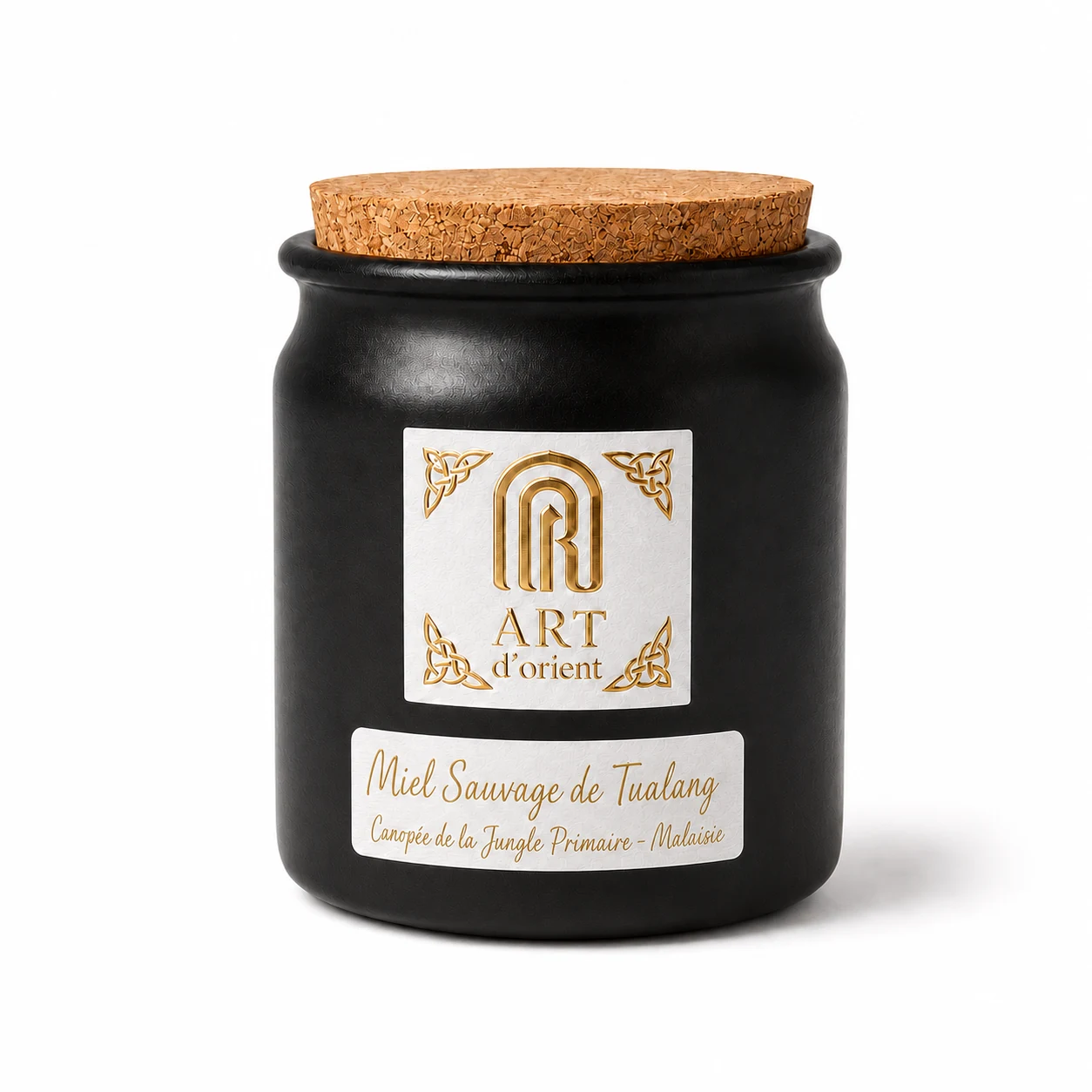
Miel de Tualang de Malaisie | Miel Sauvage d’Apis dorsata • Forêt tropicale primaire, Malaisie
Apis dorsata : collecte manuelle artisanale sur les arbres Tualang, sans traitement thermique.
Location and Growing Variables
Biotope
Une quête biologique au sommet de la canopée équatoriale : ce miel sauvage provient exclusivement de la forêt tropicale primaire de Malaisie, l’un des écosystèmes les plus anciens et les plus préservés de la planète. Sa récolte constitue un défi technique absolu : il est niché au cœur des ruches géantes construites par l’abeille géante asiatique (Apis dorsata) sur les branches horizontales du Koompassia excelsa, l’arbre Tualang. Ces géants de la canopée s’élèvent à plus de 80 mètres de hauteur. Pour collecter ce précieux sédiment liquide, les chasseurs de miel locaux doivent grimper manuellement le long des troncs lisses à la nuit tombante, une discipline d’apiculture sauvage unique qui limite drastiquement les volumes collectés chaque année.
Prélèvement
La densité moléculaire d’un miel sauvage préservé à cru : la spécificité de ce miel réside dans sa richesse biochimique issue du butinage de milliers de plantes médicinales, de lianes et d’arbres tropicaux uniques à la forêt primaire. Ce lot ne subit aucune pasteurisation, aucun chauffage industriel, ni aucune filtration fine sous pression. Ce respect absolu du produit brut préserve l’intégralité des enzymes de l’abeille géante, des levures sauvages et de la haute concentration en composés phénoliques et flavonoïdes.
Conditionnement
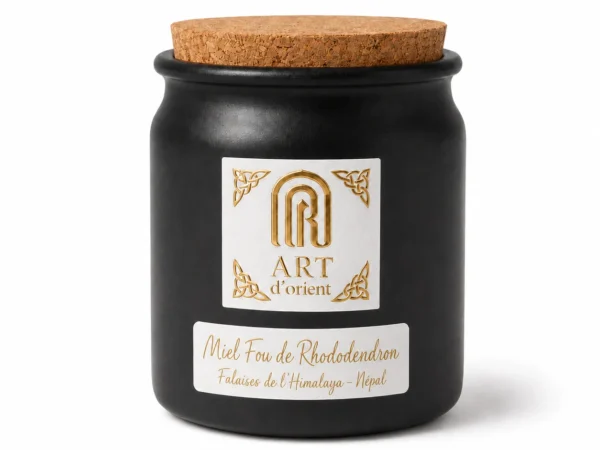
L’écrin protecteur en grès : pour préserver les enzymes actives et la structure moléculaire sensible de ce grand cru équatorial, le miel est conditionné dans un bocal artisanal en grès de 100 g. Ce matériau noble et totalement opaque fait office de bouclier thermique et lumineux absolu. Contrairement au verre blanc classique, le grès empêche les rayonnements ultraviolets de dégrader les peroxydes naturels et les acides aminés précieux du miel, maintenant sa puissance originelle intacte.
Technical Data and Processing
Nom Scientifique
Miel sauvage d’Apis dorsata.
Nom Principal
Miel de Tualang de Malaisie.
Origine
Forêt tropicale primaire, Malaisie.
Type d’Abeille
Apis dorsata (abeille sauvage géante d’Asie).
Méthode de Récolte
Collecte manuelle artisanale sur les arbres Tualang (jusqu’à 80 mètres de hauteur), sans traitement thermique.
Format
Bocal en grès artisanal de 100 g (protection absolue contre les UV et les variations thermiques).
Caractéristiques Organoleptiques
-
Aspect et Profil OrganoleptiqueRobe sombre, d’un brun-noir profond aux reflets de caramel cuit. Parfum sauvage complexe, boisé, balsamique et légèrement fumé. Bouche intense, douce mais persistante, avec une amertume très subtile en fin de palais.
-
Signature NaturelleCes éléments organiques confèrent au miel sa couleur brune presque noire caractéristique et une activité antioxydante et antibactérienne naturelle mesurée parmi les plus élevées du monde apicole.
Paramètres de Préparation
01
Rituel de dégustation pure : Pour bénéficier pleinement de la richesse de ce miel de jungle, consommez une demi-cuillère à café pure le matin à jeun ou avant une période de récupération physique. Laissez le miel fondre lentement sous la langue. Utilisez exclusivement une cuillère en bois, en nacre ou en céramique afin de ne pas déclencher d’oxydation métallique au contact des acides organiques du produit.
02
Usage en herboristerie fine : Ce miel s’utilise uniquement à cru pour accompagner vos rituels de bien-être. Il peut s’associer à une eau tiède infusée (ne dépassant jamais 40 °C pour ne pas détruire les composés thermosensibles) ou venir napper délicatement une lamelle de Reishi décoctée pour en équilibrer l’amertume boisée.
03
Recommandation de conservation : Conservez votre bocal en grès hermétiquement clos dans un endroit tempéré et parfaitement sec (entre 18 °C et 25 °C). De par sa nature sauvage et sa pureté brute, ce miel présente une haute stabilité biologique, mais il doit rester à l’abri des variations d’humidité pour maintenir sa texture veloutée.
Reviews
There are no reviews yet.